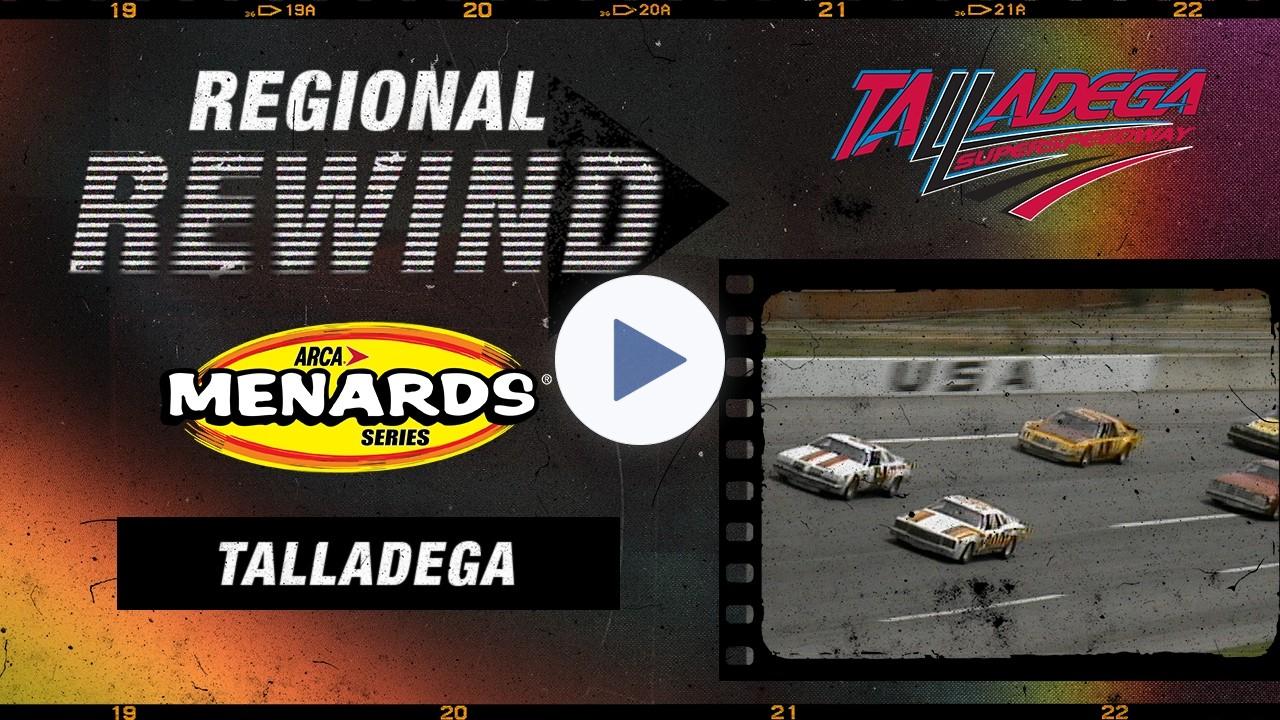
As you can see, they have uploaded the 1982 Talladega ARCA 200 to YouTube. This race was held May 1, 1982 as the primary support race to the NASCAR Winston Cup Series Winston 500. That race was the first Cup race to air live, flag-to-flag on TV from Talladega on ESPN.
It also marked the one and only Cup start for the infamous L.W. Wright.
At the time, ESPN was hard up for broadcasts to air on their fledgling cable channel that was in Year No. 3 on the air. At the time, the only one of the four major leagues with games on the channel was the NHL, but it wasn't a league-wide deal. Similar to NASCAR at the time, they struck up deals with individual teams, like
the Hartford Whalers.
Since the cameras and the staffers were already in Talladega, they decided to produce and broadcast the ARCA race as well. This is a very rare broadcast that was actually not previously on YouTube prior to Thursday and most longtime fans had never seen it (or, hadn't seen it since 1982).
It should be noted that the Winston 500 that weekend was actually blacked out in some parts of the Southeast. Track owners were still very afraid of TV hurting ticket sales, even though cable television still wasn't all that prominent.
The video cuts out the intro to the broadcast and starts us with the pace laps. Bob Jenkins and Larry Nuber, ESPN's normal booth duo for
Cup races at the time, were on the call with Dick Berggren in the pits.
Despite it being 1982, essentially the entire field was running 115-inch wheelbase cars from before the Cup Series downsized. It's actually rather strange to look at. If you've seen the 1979 Daytona 500 before, you have a general idea of the types of cars here. Heavy emphasis on Oldsmobiles.
Driver-wise, you're probably not going to recognize most of the drivers in the field. There are a couple of people whose names might be familiar, such as Ken Ragan (David Ragan's father) or Red Farmer. John Anderson is probably best known for having a blowover flip during his Twin 125 at Daytona in 1981.
The
broadcast paid quite a bit of attention to Billie Harvey, who had raced in the Daytona 500 that year and started 28th in this race. At the time, Harvey was under indictment in connection to a huge drug smuggling operation.
The New York Times reported in 1982 that Harvey was considered to be the head of one of four groups illegally importing marijuana into the United States. This fact was not mentioned on the broadcast. For further reading on that topic, I recommend Randy Lanier's autobiography, Survival of the Fastest: Weed, Speed, and the 1980s Drug Scandal that Shocked the Sports
World.
It appears that Harvey had not been able to qualify the car himself, hence why he started 28th. Why that was so is unclear.
Things were significantly more rudimentary in 1982 as compared to today, but Berggren got some driver interviews. He was even allowed to go over-the-wall
and interview drivers on pit road, as he did with Anderson after he broke.
Quite simply, he was a busy man that day and provided good coverage from the pits and garage as there was a lot of attrition. Only 11 of 29 starters finished the 76-lap race. Let's hope Saturday's ARCA race is not like that.
The number of cameras available to ESPN were not all that numerous. No in-car cameras and only a few operated cameras. Despite that, the broadcast did a decent job at bringing viewers the action. However, it was pretty obvious that this broadcast was tape-delayed. Bill Green at one point went from 10th to taking the lead in about two seconds flat.
The finish was rather
weird. Coming to the one-lap shootout, Scott Stovall started smoking heavily. Instead of stopping, he kept on trucking. That was weird. Jimmy Vaughan got Harvey on the restart for the win driving the only Ford in the field. It's another one of those situations that catch people out today with ARCA restart rules.
Post-race coverage was relatively brief. We got a victory lane interview with
Vaughan, who clearly wasn't all that well-versed with interviews, but was very happy. That was about it. Of note, Vaughan was described as an up-and-coming driver, but this appears to have been his only career ARCA win.
Overall, this was a very interesting look back at an era of ARCA that not a lot of people remember much about. I believe this was during the period in which our former colleague
John Potts was working for the sanctioning body.
You had a somewhat bizarre mix of cars racing. Mostly pre-1981 former Cup cars, but also cars that could race in the USAC Stock Car Series and the then-Budweiser Late Model Sportsman Series (now the NASCAR O'Reilly Auto Parts Series). There was at least one team running a big block engine as well. Definitely not used to that.
This race looks to have been rather chaotic in real time. ESPN did a decent job putting this broadcast together. Berggren was excellent in the pits getting all the information out there to viewers. I wish there was more post-race coverage. I would have wanted to hear from Stovall as to what was going on with his engine at the finish, but time didn't allow for that.
Phil Allaway is the Frontstretch newsletter manager. He can be reached at [email protected]. Photo is courtesy of our own Tanner
Marlar.