As you're likely aware by now, INDYCAR announced a new street race last week that will be held in Washington, D.C. in August. This came after President Donald Trump signed an executive order effectively requiring it to happen.
I personally think that this whole thing is crazy and shouldn't happen.
Realistically, it will shut down the National Mall for weeks and result in the downtown core being overwhelmed by construction for the entire summer. Since tickets are apparently going to be free, the event is guaranteed to lose money. We haven't even broached the idea of whether the city would even support this at all.
Yesterday, INDYCAR announced a deal with Monumental Sports & Entertainment to promote the event. This is the Ted Leonsis-owned company that controls the Washington Capitals, Washington Wizards, Washington Mystics and the Capital City Go-Go (the NBA G League franchise that is an affiliate of the
Wizards). While they have plenty of sports experience, I don't believe that they have any racing experience. We'll see how that goes.
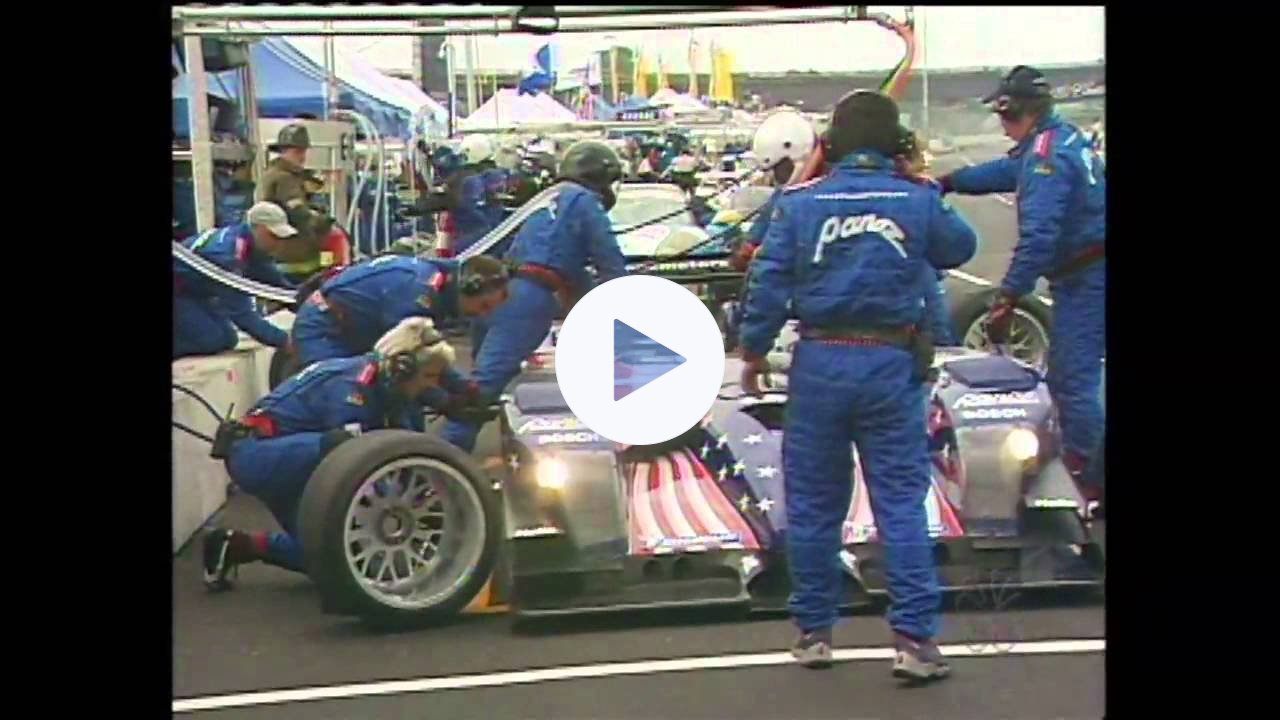
It should be noted that while this INDYCAR race (if it happens) will be the first race on the National Mall, it is not the first major auto race in Washington, D.C. Back in 2002, the American Le Mans Series pulled that off.
If you look at an aerial shot of the area near the currently-being bulldozed RFK Stadium, you'll notice some relatively new playing fields to the north of the stadium. Next to the fields, you'll see what seems like an inexplicably designed paved road.
That design is not inexplicable. That constitutes part of a 1.66-mile temporary circuit that was set up in one of RFK Stadium's parking lots in 2002. That circuit hosted the American Le Mans Series in what ended up being
a one-off race weekend even though a deal was signed for 10 years.
In 2001, the race was announced as
the National Grand Prix of Washington, D.C., described as "..an international, annual motorsports event and festival on the grounds of Robert F. Kennedy Memorial Stadium." It was supposed to bring $350 million to the metro area over that 10-year period. The American Le Mans Series was announced as the headlining series, with the SCCA Trans-Am Series as primary support. Eventually, SPEED World Challenge was added as well.
The weekend was promoted by National Grand Prix Holdings, LLC, a company owned by Christopher Lencheski. Today, Lencheski is the CEO of IRG Sports + Entertainment, a promoter of sports and live entertainment experiences. He has also served as a lecturer in Sports Management at Columbia University.
Cadillac came on as the title sponsor of
the race, which became the Cadillac Grand Prix of Washington, D.C. The race itself was a typical sprint race for the time, two hours and 45 minutes in length.
In 2002, Audi Sport Team Joest was dominant with the Audi R8, but Panoz Motor Sports came out on top with David Brabham and Jan Magnussen winning by .762 seconds over Rinaldo Capello and Tom Kristensen. Corvette Racing's Ron Fellows and
Johnny O'Connell won the GTS class in their Chevrolet Corvette C5-R by a lap over teammates Kelly Collins and Andy Pilgrim.
The LMP675 class was won by Intersport Racing's Jon and Clint Field in their Lola MG EX257 by eight laps over the Pilbeam of Team Bucknum Racing's Jeff Bucknum, Chris McMurry and Bryan Willman. Finally, Alex Job Racing's Lucas Luhr and Sascha Maassen won GT
in their Porsche 911 GT3 RS by 31.32 seconds over The Racer's Group's Kevin Buckler and Brian Cunningham.
The race had decent attendance, but according to the Washington Examiner, it went over budget by millions. In addition, as you can see from the linked Google Maps satellite photo above the circuit was close to residential areas. There were significant complaints about noise during the race weekend with seemingly nothing done to mitigate it. As a result, the race ended up being a one-off.
That said, the 1.66-mile circuit that was created was actually quite nice. It was much wider than the garden variety street courses of the day. There were multiple passing opportunities and most of the drivers seemed to really like the circuit.
Washington was one of three new street events that were added to
the ALMS schedule that year (the others were Trois-Rivieres and Bayfront Park in Miami). Trois-Rivieres was an existing street racing weekend that had existed for more than 20 years by that point with a variety of series such as Trans-Am headlining. Today, that weekend is headlined by NASCAR Canada.
Washington and Miami were completely new setups. The Washington race weekend had much better
racing than Miami did. That race weekend (a joint CART/ALMS weekend) was marred by surface issues on a 1.387-mile circuit and a narrow layout that really wasn't conducive to good racing). However, they did race for a second year in Miami on a revised 1.15-mile circuit.
INDYCAR's new Washington race won't likely have the same residential noise complaints. While we do not have an official layout
as of yet, the circuit will likely be right downtown near museums and government buildings. That part of Washington, D.C. doesn't have that many people living there. Also, the current cars in the NTT IndyCar Series (and the support series, if they end up being included) are quieter than what was in ALMS in 2002.
If the Freedom 250 Grand Prix ultimately happens in August, it will be a very
different event as compared to the ALMS race in 2002. I fear that it could be even more ignorant of the local community than the 2002 race. Without a confirmed layout, I cannot say for sure that it will or will not negatively affect people that live in the area, but I know that it will be disruptive.
Phil Allaway is the Frontstretch newsletter manager. He can be reached at [email protected].